2024 Comprehensive Guide to California's New ADU Regulations
Posted June 4, 2024
Obtaining approval for ADU plans is now simpler and more cost-effective.
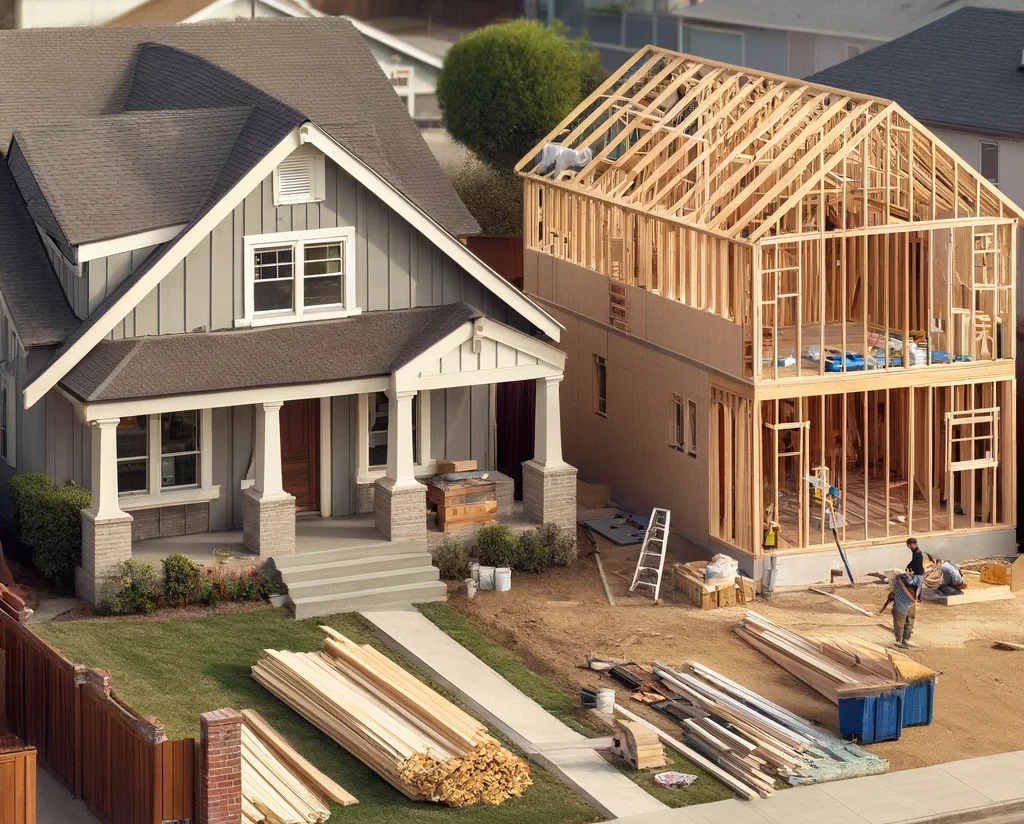
Accessory Dwelling Units (ADUs) and Junior Accessory Dwelling Units (JADUs), often known as Granny Flats, In-Law Units, or Guest Houses, have gained immense popularity for various reasons:
- Adding value to your property.
- Offering an affordable construction option, particularly for garage conversions.
- Providing a rental income source, especially with rising rental prices.
- Offering affordable housing for extended family members while ensuring privacy.
- Providing the flexibility of shared living areas while allowing seniors to age in place.
As of 2024, the State of California has continued to enact new ADU laws, removing restrictions and making it more accessible and affordable to construct Accessory Dwelling Units. Consequently, ADU construction in California has surged, with over 80,000 ADUs permitted since the first ADU reform bill in 2016.
Here are some key highlights of the new California ADU laws effective from January 2024
Law AB 1033
California has traditionally permitted local agencies to prevent the independent sale of Accessory Dwelling Units (ADUs) from the main dwelling for owners, investors, and developers. However, Assembly Bill 1033 changes this by allowing homeowners to sell one or more ADUs separately from their primary residence. This law gives local agencies the option (not obligation) to establish local ordinances permitting ADUs to be sold as condominiums separately from the main dwelling, subject to approval from the California Department of Real Estate. Homeowners might also consider forming a Homeowners Association (HOA) to oversee shared property between the primary residence and the ADU.
Law AB 976
Presently, California’s ADU laws prevent local agencies from enforcing “owner-occupancy” conditions on ADUs permitted between January 1, 2020, and January 1, 2025. Assembly Bill 976 extends this prohibition indefinitely, ensuring that local agencies cannot mandate owner-occupancy for new or converted ADU projects permitted after January 1, 2025. However, it’s important to note that local agencies can still enforce owner-occupancy requirements on Junior ADUs.
Law AB 434
Assembly Bill 434 mandates that every city and municipality in California must establish a pre-approved plan scheme for ADUs by January 1, 2025. To qualify for pre-approval for prospective applicants or property owners, cities must evaluate and approve submissions, usually conducted by an architect. Cities have the option to levy fees for accessing these designs, processing applications, and making adjustments to meet property-specific criteria.
Image Accordion #2
Image Accordion Content Goes Here! Click edit button to change this text.
Image Accordion #1
Image Accordion Content Goes Here! Click edit button to change this text.
Image Accordion #3
Image Accordion Content Goes Here! Click edit button to change this text.
Here's a summary of the laws that became effective in January 2023:
Changes to the 60-Day Rule
Assembly Bill 2221 mandates that all entities responsible for evaluating California ADU plans, such as planning departments and utility companies, must provide a response within 60 days of plan submission. This adjustment aims to streamline the review and processing timeline for applications.
Updated ADU Height Limitations
Assembly Bill 2221 also modified the height regulations as outlined below:
- 16 ft: Permitted without any conditions.
- 18 ft: Permitted if the proposed ADU is located within a ½ mile radius of public transit or if the property already features a two-story multi-family dwelling.
- 25 ft: Permitted for attached ADUs, subject to the property’s underlying zoning code (whichever imposes the lowest restriction will apply).
Revised Setback Regulations
In the past, setbacks were minimized to four-foot side and rear yards. However, under current California law, if a proposed ADU is under 800 sq. ft., the front setback rule cannot obstruct the construction of the ADU.
Unpermitted Conditions
Senate Bill 897 removes the prohibition related to non-conforming zoning conditions, building code infractions, or unauthorized structures. Before SB 897, homeowners had to update unpermitted structures to meet current codes, resulting in slower and more expensive ADU development in California. SB 897 lifts these constraints, except in cases where the unpermitted condition poses a health or safety risk.
Fire Sprinkler Requirement
SB 897 eliminates the necessity of fire sprinklers for the primary residence when obtaining a permit for an ADU.
Other Noteworthy Changes
- Attached Junior ADUs are no longer required to have their separate bathroom if there’s one available in the primary dwelling.
- Demolition permits cannot be withheld once the ADU permit has been granted.
- The establishment of the California ADU Fund to offer aid to qualifying individuals.
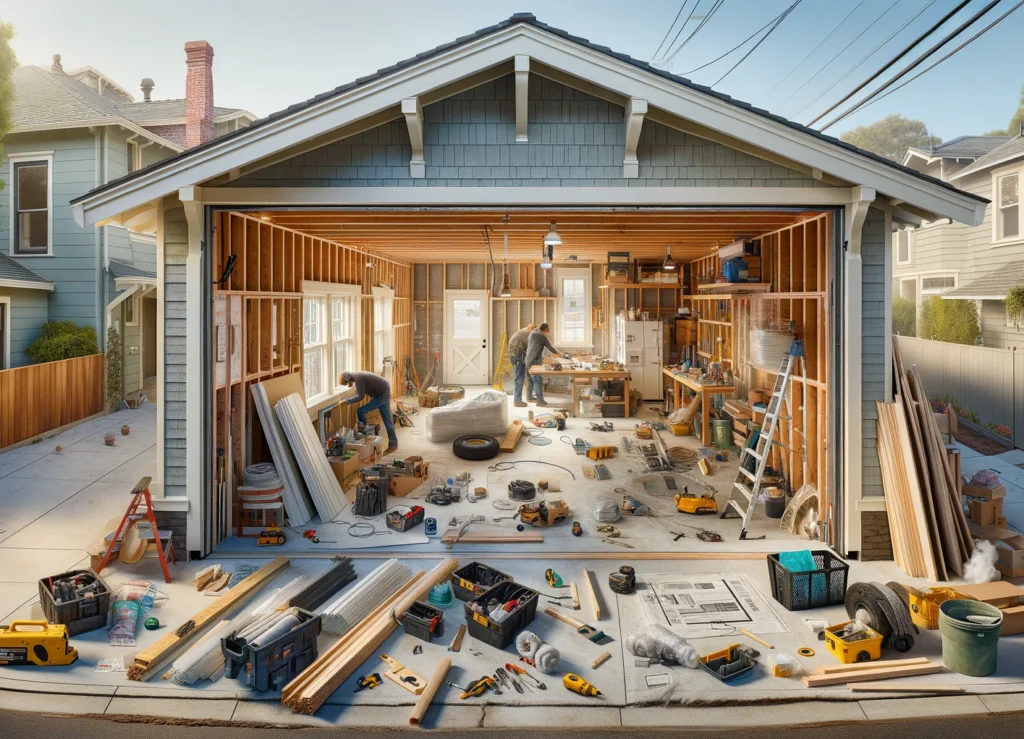
Here's a summary of the laws that took effect in January 2022:
- Senate Bill 9, concerning duplexes and lot divisions, enables the ministerial approval process for transforming owner-occupied homes into duplexes, subject to specific eligibility criteria. Additionally, it permits the splitting of a single-family home lot into two, with the construction of a duplex on each lot, contingent on the owner residing in the initial home as their primary residence for a minimum of three years.
Highlighted aspects of SB 9 include:
- Projects must be for residential use only.
- Properties are within an urbanized area designated by the City and are not within agricultural, historic, and very high fire severity zones.
- Parking requirements need to be met unless ½ mile from a public transportation stop.
- The project will be subject to local short-term rental requirements.
- May include connected structures (duplex) if they comply with building code safety standards.
- If a lot is split, the project may be subject to City or County easements and must be roughly split in half.
- Lots must meet minimum size requirements for a lot split.
- The lot cannot be adjacent to another lot that has been split using SB 9.
It’s important to note that there are exceptions and limitations to SB 9 that must be comprehensively grasped.

Additional Key Points
Assembly Bill 68 grants landlords and homeowners the ability to add two more units – an ADU and a Junior Accessory Dwelling Unit (JADU) – on any residential lot. This implies that you can lawfully establish a triplex on every individual lot (subject to size and setback prerequisites) as per the 2024 ADU laws in California.
Additional units can be integrated into existing multi-family buildings such as apartment complexes. Property owners have the liberty to convert any non-habitable spaces, like attics, basements, garages, etc., into sanctioned additional units.
Under AB 68, municipalities are mandated to authorize the following:
For Single-Family Homes:
- One ADU (up to 1,200 sq. ft.) and one Junior ADU (a unit not exceeding 500 sq. ft. and fully contained within an existing single-family structure) per lot.
- One detached ADU (up to 1,200 sq. ft.) that can be new construction, an existing structure, or identical in footprint to the existing structure, in addition to one JADU.
Multifamily Dwellings:
- Numerous ADUs within existing multifamily structures.
- Two detached ADUs on a multifamily lot.
Other Limitations Barred by Local ADU Regulations
To facilitate the approval of ADU plans in California in 2024, several state laws remain effective, preventing local governments from enforcing the following:
- Cannot mandate lot coverage or minimum lot size criteria.
- Cannot demand replacement parking when a garage, carport, or covered parking structure is removed or converted into an ADU.
- HOAs are prohibited from “prohibiting or unreasonably restricting” the development of ADUs on single-family residential properties.
- Local agencies cannot levy impact fees on ADUs smaller than 750 sq. ft.
Interpreting the Law
Please be aware that this summary is solely based on the State Ordinance. Therefore, it’s essential to understand that each City and County will issue its own ADU guidelines in response to the new state laws. Some Cities and Counties may delay the implementation date or contest the state’s regulations through legal means to align with their local codes. Variations of these State regulations will vary in each jurisdiction.
Whats Next?
Given the intricacies of the new laws and the interpretations by City or County authorities, it is imperative to seek advice from an architect well-versed in the 2024 ADU laws in California – and I Arch Studios is here for you!
We are a comprehensive architectural design firm with skilled designers who are knowledgeable about the rules and regulations governing both new ADUs and ADU conversions. We offer transparent and immediate pricing for your ADU plans. Contact us today to commence designing a floor plan and obtaining permits for your ADU.
Furthermore, follow us on Instagram to stay updated on our activities and gain inspiration for your upcoming home renovation or addition!